Saturday, November 27, 2010

Week Seven: The Black Cloud - Sir Fred Hoyle

Week Seven - the Black Cloud was written by famed UK astronomer Sir Fred Hoyle, back in 1957 and is a stunning and precipitous novel about contact with an alien intelligence. It defies conventional wisdom and structure to climax in a way that would horrify literary and film critics alike. Sweeping and calamitous events are dealt to in short and almost off hand paragraphs, which serve to illustrate the nature of the story itself.

There are some wonderfully naive and intelligent characters contained and they say the most amazingly intelligent, coherent and perceptive things about humanity and alien beings in very succinct terms.

I picked up a recent re-print edition after seeing it reviewed in the Guardian online. It comes with an afterword by Richard Dawkins, and having read the book I can see why he would want to, or was chosen to comment.

It's about the nature of a whole bunch of things like the universe, humanity, politics, religion, physics and by extension of all those things, God and our place etc...

But it does not preach and that is the brilliant thing about this - this is an academic exercise, not an action movie or worse, a sermon.

Above all else this is a great read.

Monday, November 22, 2010

Week Six: Grow your own Drugs - James Wong


Not a manifesto for the "Leaglise" movement, but a cookbook of sorts with all sorts of handy advice for keen gardeners and non-conformists alike on how to use herbal remedy type solutions and home make those things that you would normally pay for someone else to make.

I thought I'd read this as an antidote to the psychological books I'd been into lately and sure enough it's very, very different. The approach is one I kind of agree with as a choice, drugs in and of themselves are not bad, anymore than lotions and ointments made in factory are not. This is a way to make these yourself, not preach how awful all these chemicals are etc...

Which is good because a huge percentage of these "chemicals" are present in naturally occurring things - which is where we got them from in the first place. Like Acetyl-Salicylic Acid - which became Aspirin (Dispirin) and Heroin and a few other choice drugs.

What was interesting was how make emulsions and oils and what all the differing things do. There's loads of gardening advice and then page after page of "recipe".

Interesting to read about someone else's passion - on a scientific subject delivered so rustically, but with common sense and not a head full of "belief" and "nature" as if these two things can convince any rational mind.

Enough ranting, it was interesting but not fascinating. A curiosity.

Next Week: The Black Cloud by Sir Fred Hoyle (or the Infinite Crisis Graphic Novel - depending on how much time I have).

Saturday, November 13, 2010

Week Five: Sway (The Irrestible Pull of Irrational Behaviour )


Sway: Ori Brafman and Rom Brafman.

Another in a long line of psychological behaviors and/or social economics books I have on my list. This one gets points for being brief and easy to read, with really fascinating case studies, but little else.

It was interesting to see yet again the way we think and the way we act are not what we think they are, but the book provides anecdote after anecdote, experiment after experiment and study after study. Then what?

People are stupid and don't always act rationally? Hardly a news flash, but the subtitle of the book describes the pull of irrational behaviour, but nowhere in this book is there such a thing. Instead it simply does what always happens in scientific progress, our understanding of the parameters changes. Things we didn't know - we now know or have uncovered.

All very interesting stuff, particularly in the chapter on job interviews (you should test all applicants before reading their CV's basically - which is a brilliant idea).

Ultmiately I'm not looking for hope or a roadmap to success - just a little more information and insight. It has the information, but no insightful commentary or revelations. It's defeatist as it tends to come full circle as if to say "oh well, that's the way we are, it doesn't make sense does it?"

People are stupid, I know that and I fall prey to the same stupidity sometimes and this book points it out, but that's all.

Not lame, just not great, damned with faint praise?

Perhaps I'll try something completely different next week.

Friday, November 5, 2010

Week Four: The Death of Bunny Munro by Nick Cave


Two things, yes it's THAT Nick Cave and no I didn't buy it for the cover. Actually the cover of the version I have is all red and only has the title and author text that takes up the entire cover. The lady at the bookshop where I bought this told me that there was a more offensive cover (she wasn't offended but there were complaints) but that it had been reissued with something less 'grabby'.

So as I post this is the first time I've seen the cover, and the cover is pretty lightweight based on what's actually inside the book and if the picture is of the scene that I assume it is, well it's much worse than what people were probably complaining about.

On to the book. It's vicious and dirty, cathartic and revealing as well. It's not a book I'd recommend to many people, but not because of the content so much as the content. I know that's a bit backwards, but the story is redemptive, reads like a David Lynch film plays out and in the end is so full of metaphor, self loathing and fantasy (guilt induced) that I couldn't help but feel that it wasn't intended to shock or disgust, or even confront the reader. It felt more like the author just wanted to speak without boundary or internal censorship. It's not a treatise on the human condition, nor a shock fest for the genre lovers.

The death of Bunny Munro is a psychological balancing of the scales, for one man who could be all of us, but in truth is none of us. I can picture Nick Cave acting this out in my head, and hear the sympathetic timpani of his voice running through it's narration. Loved the language and the style and unencumbered nature of his observations. Everyone is up for it, in our minds and in our fictions, we usually never publish them in general terms.

Next Week: Sway (The Irresistible Pull of Irrational Behavior) and a return to non-fiction in attempt to wade through all the behavioral science books I have...

Friday, October 29, 2010

Week Three: Books 4, 5 & 6 (Freakonomics, Outscourced & The Language of Things)

I was on holiday at a bach up in Omaha for 4 nights, so I got a little more reading time in as someone insisted I leave the I Pod at home. So roughly one book a day and part way through next weeks book. Two non fiction and one fiction, I enjoyed one and tolerated the other two. Spoiler alert I left the best for last (even though I read it first).
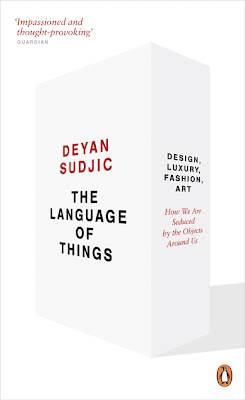


I was disappointed in The Language of Things as it belied the purpose for which it looked to be intended. The sub title was "How we are seduced by the Objects around us" and it was not so much of that as it was a lecture on how bad that is. While there was a load of really good information in this on Design and Art as disciplines, the author had a serious passive agressive axe to grind on a load of different things in the world of design, consumer products and other items. So while I was reading the book to know more about how design of objects does in fact do this, a lot of the time the author was sermonizing and putting forth a very seriously one sided non-debate on the nature of commercial society and other evils.

And that's the problem with the book, set into 4 main parts: Design, Luxury, Fashion & Art - each one of them is not really the discussion the cover and/or title declares itself to be. The introduction feels like someone being very disappointed in you the reader, even as you are picking up and reading his book. Luxury is a socialist manifesto or perhaps a work of philosophy. Fashion is just downright catty and then begrudgingly respectful of the industry - which is at odds with almost everything he says in the book.

The chapter on Art is where the book finally makes sense. The author is the Director/Curator or whatever of the Design Museum, and in the discussion on Art he shows his true colours as having a love/hate relationship with Art Museums, New York's MoMA in particular.

All in all it was interesting enough, but was too much hard work and uncomfortable to read, not because of the way it exposed or pointed the finger, but in the constant disapproval from the author just being bloody irritatingly obvious.

One major quibble is that in the Art section he states the difference between Art and Design is that design is done to a spec or a brief or instructions that the designer then interprets. However even a cursory examination of Art denies this as true. The Mona Lisa, The Sistine Chapel, the Last Supper and lets say 90% of Renaissance Art all falls into the design description? I don't think so.

Let it go Deyan Sudjic, let it go.
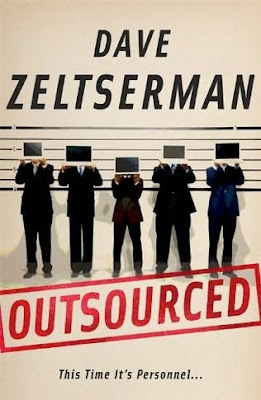


A brilliant idea from Dave Zeltserman, but poorly executed. The concept being that four laid off software engineers all get together and plan/pull off a bank heist. Looked like a good idea. It was not a good read.

Many reasons, the characters first and foremost. Do stupid things. Are immensely dislikable. Cannot be trusted - obviously. Are all cardboard cutouts and just downright offensive. You like and identify with the main character right until the very end and then you are just left felling like you have wasted a day reading this. I didn't like any of the motivations, the dialogue and the relationships between these guys was ludicrous. I know and trust these people with my life and will go rob a bank with them? No way that anyone of sane mind would have even trused one of these guys with a trip to the shops to buy milk, let alone put a weapon in their hands and let them loose on a "fool proof" plan?

The sudden yet inevitable betrayal (Thank you Joss Whedon) and the suddenly shocking violence and silly reactions were just laughable. Except I wasn't laughing - I was annoyed. After reading Empty Mile (a Crime Noir done right) this was immensely disappointing - despite what could have been a great premise.

And finally a book I liked. Though as I have already read (Thanks Jon Stewart) and enjoyed the sequel, I could hardly be expected to think this was tripe. It's more disjointed than the sequel SuperFreakonomics, and you can see by the inclusion of the original Blogged material that this was a journeyman effort, and that they honed their craft much more craftily in the follow up volume.

Things I found interesting, the chapters on Parenting (TV makes no difference overall, loads of books in the house is a sign of education and affluence), Drug dealing is not the money maker that movies and TV make us think is and that you can't actually buy an Election (but money follows the likely winners).

Once again this is not a book or thought out hypothesis to prove/disprove so is disjointed in comparison to the layout and intent of the much better arranged book above (The Language of Things) but the structure is just secondary to the fact that this is just fun to read in pieces and will make you think twice when you look at things you think you know.

Friday, October 22, 2010

Week Two: Empty Mile - A Novel by Matthew Stokoe

Week Two, Book Two.

Fiction this time, and the first fiction I've read all the way through in a while now. Usually it's science, history or something else in between that. The thought of filling myself with other people's fictions when I have plenty of my own, put me off fiction in general for a while.

But for a Fictional comeback there's nothing better than something like this, a personal connection to a book. In this case a novel written by a friend of mine.

It's good, I really enjoyed reading it, despite the bleak path it treads inexorably towards resolution, evolution and eventual emancipation. I've always found Matt's style and prose engaging, even if the subject matter disturbs somewhat in places. Empty Mile is a very different beast to me than High Life was even if some of the elements share similarities. It's more like he's taken a faded yet thick sepia curtain and drawn it across the nasty exposed innards of his other works and suggested at the shape of things rather than turning on the spotlight per se. Though every now and then the red hot poker cauterises a small clean hole through that and gives you that peephole glimpse of the darker nature.

And for all those reasons I really enjoyed reading this book. Unsettling but not confrontational. It's very noir, very twisted and complex, but also simple and ultimately satisfying in it's conclusion. Slow and deliberate in both pace and revelation have paid off for the ending to make it's mark.

I especially loved the title and how that works out to motivate the guilty, the innocent and the obsessed that live and die in Oakridge.

Next week I'm undecided, but it will be either:
a) Sway (The irresistible pull of irrational behaviour)
b) The Language of Things
c) Freakonomics (I've already read the sequel).
Or
d) The Enchantress of Florence - Salman Rushdie.

Saturday, October 16, 2010

Week One Book One - 59 Seconds


And so it begins. I have a huge amount of books I have not read and it's about time I did.

So one book finished per week for a year. That should take a decent chunk out of the backlog for me.

Book One: 59 Seconds by Richard Wiseman.

It's a book that looks at the popular theories or facts (supposed facts) of Self Help and re-examines them based on actual scientific experimentation and either proves, disproves or upsets the apple cart all together.

It's a great read because there's no "believe" or "suggest" or anything else fluffy. Just cold hard science. And a good sense of humour.

Among my favourites were how to act in a job interview that will get you remembered positively, how to persuade people to come round to your point of view and how to praise your kids without setting unreal expectations (spoiler alert: praise the effort not the result).

I recommend it to anyone who is addicted to self help books and is not getting results. It will not make you feel better, but it will help you understand how it works. The rest as they say is up to the reader.

NEXT WEEK: The Empty Mile by Matt Stokoe.

WW